Last updated 2026-07-24
TL;DR
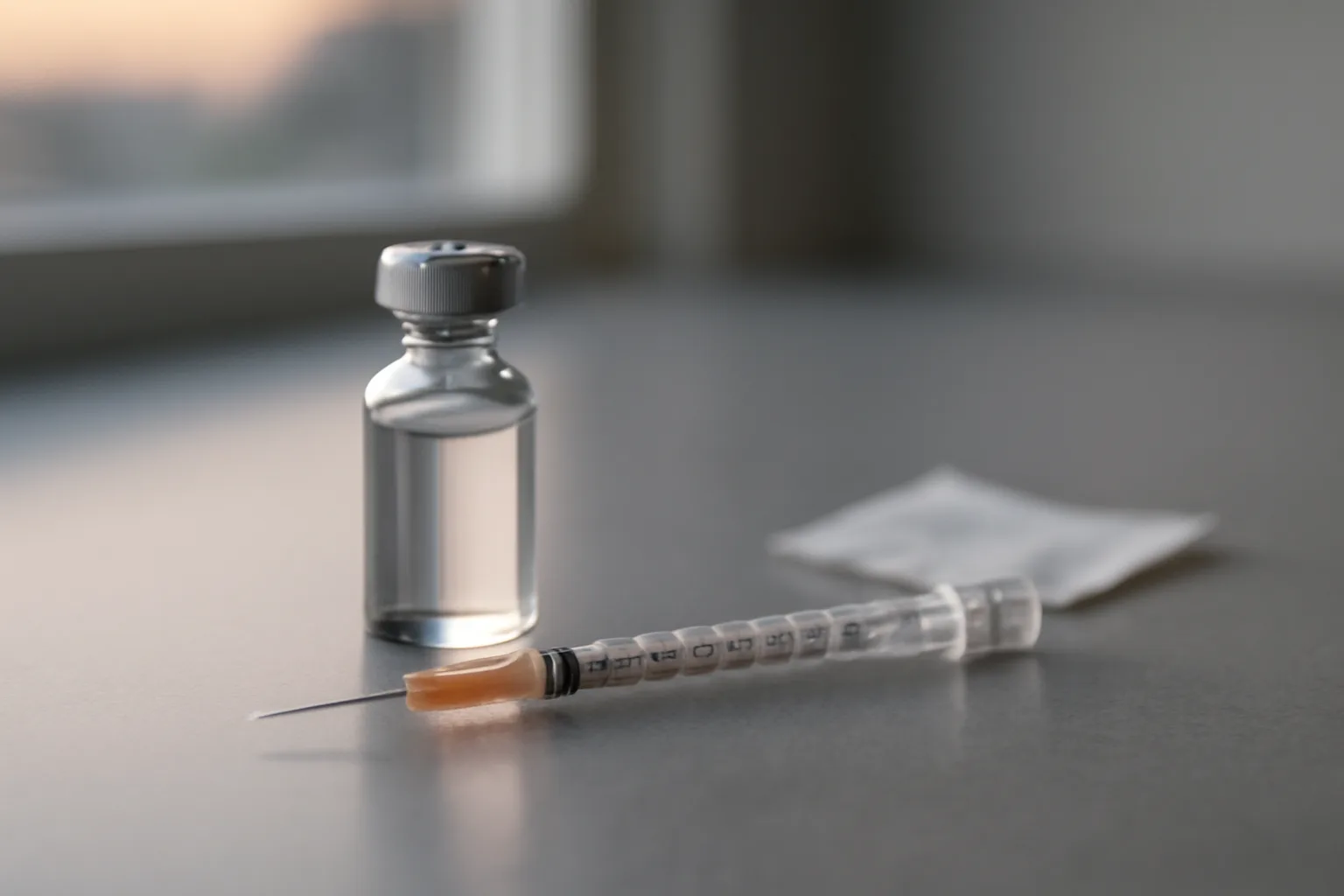
There is no legitimate oral sermorelin. Sermorelin is a peptide, and peptides get digested in the gut before they can work, so every real product is a subcutaneous injection. Oral "sermorelin" pills, sprays, and drops sold online are not the same molecule reaching your bloodstream in any meaningful dose. The FDA-approved version, Geref, was itself an injection, discontinued for business reasons, not safety.
Is sermorelin available as an oral supplement, or only as an injection?
Every legitimate form of sermorelin is a subcutaneous injection. There is no oral prescription version, and there never has been. Sermorelin is a 29-amino-acid peptide, a fragment of natural growth-hormone-releasing hormone (GHRH). Peptides are chains of amino acids held together by bonds that your digestive system is specifically built to break. Swallow a peptide and stomach acid and gut enzymes chop it apart before it ever reaches the bloodstream intact. This isn't a sermorelin-specific problem; it's why insulin, GLP-1 drugs before newer oral formulations, and most hormone peptides are injected rather than pilled. When you see "oral sermorelin," "sermorelin spray," or "sermorelin drops" for sale, you're looking at a product making a claim the chemistry doesn't support. Some of these are flavored liquids with a trace of peptide meant to be misted under the tongue, on the idea that sublingual absorption skips the gut. There's no published pharmacokinetic data showing sermorelin achieves meaningful bioavailability this way. Compare that to the injectable route, where absorption and dosing have decades of documented clinical use behind them [1] [2]. The honest bottom line: if a seller offers you oral sermorelin, that's a signal to walk away, not a product to compare on price.
Why can't sermorelin be taken as a pill like other hormone medications?
Size and structure. Sermorelin is a 29-amino-acid peptide chain, much larger and more fragile than a typical small-molecule pill like levothyroxine or testosterone tablets. Digestive proteases in the stomach and intestine target exactly the peptide bonds that hold sermorelin together. Researchers who study peptide detection have had to build increasingly sensitive lab methods, like ultrafiltration-based mass spectrometry assays that pick up sermorelin fragments in urine and plasma at low picogram-per-milliliter levels, specifically because these peptides degrade so readily and are hard to trace once metabolized [3] [4]. That fragility that makes doping-control labs work so hard to detect it in blood and urine is the same fragility that makes an oral tablet a non-starter. One workaround chemists have explored is PEGylation, attaching polyethylene glycol chains to GHRH analogs to slow degradation and extend half-life [5]. That's a drug-delivery research strategy aimed at improving injectable formulations, not a route to an oral pill. No PEGylated or otherwise modified sermorelin product has reached the U.S. market as an oral option.
What was Geref, and why was it discontinued?
Geref was the brand name for FDA-approved sermorelin acetate, marketed in the United States as an injectable treatment, primarily for diagnosing and treating growth hormone deficiency in children and for GH-stimulation testing [6] [1]. It's part of why sermorelin has a more documented regulatory history than most peptides sold online today. Geref was discontinued, not pulled for a safety problem. Manufacturers stop making approved drugs for all kinds of reasons: low sales volume, changing standard of care, cheaper alternatives, or a business decision to focus resources elsewhere. You can check any drug's current approval and marketing status yourself in the FDA's Drugs@FDA database [6]. A discontinuation is a business fact, not a recall, and it's worth being precise about that difference when a seller tries to spin it into a safety scare or, conversely, when a seller implies discontinued means abandoned-and-therefore-fair-game for casual use. After Geref left the market, sermorelin didn't disappear. It's now available through compounding pharmacies operating under section 503A of the Food, Drug and Cosmetic Act [7], which allows a compounding pharmacist to prepare a patient-specific dose of a bulk drug substance under a valid prescription. Whether a given bulk substance is even permitted for compounding is a live regulatory question the FDA tracks through its 503A bulks list [8] and its nominated-substances list [9]. This is also why a legitimate sermorelin prescription today comes from a compounding pharmacy, not a pharmaceutical manufacturer selling a branded product.
Sermorelin injection vs HGH injection: what's actually different?
Both are injections, so the oral-vs-injection question doesn't apply here, but this is the comparison most readers actually want answered. Sermorelin and HGH (somatropin) work at different points in the same system, and that difference matters more than the delivery method. HGH is the hormone itself. Injecting it puts growth hormone directly into your bloodstream, bypassing your pituitary gland's own signaling entirely. Sermorelin is GHRH, the signal that tells your pituitary to make and release its own growth hormone. It only works if your pituitary is still capable of responding, which is exactly what a GH-stimulation test using sermorelin is designed to check [1]. A 2006 review describing sermorelin for adult-onset GH insufficiency frames it as working with the body's own feedback loop rather than replacing it outright, which theoretically preserves the natural pulsatile pattern of GH release, though the review itself is dated and reflects the evidence base as it stood in 2006, not current head-to-head outcome data against HGH [1].
| Feature | Sermorelin injection | HGH injection | |
|---|---|---|---|
| What it is | GHRH analog (29 amino acids) | Growth hormone itself (somatropin) | |
| Mechanism | Stimulates pituitary to release own GH | Directly replaces GH | |
| Requires working pituitary | Yes | No | |
| FDA-approved brand history | Geref (discontinued) [6] | Multiple approved brands remain on market [6] | |
| Current U.S. source | Compounding pharmacies under 503A [7] | FDA-approved prescription products | |
| Typical use case studied | GH deficiency diagnosis/treatment in children, adult GH insufficiency [1] [1] | Diagnosed GH deficiency, certain approved indications | Where sermorelin is the weaker choice: if someone has a pituitary that can't respond, sermorelin won't produce meaningful GH release no matter the dose, because it depends on pituitary function that HGH injections don't require [1]. It's also not a faster or stronger option than HGH; it's a different mechanism with a built-in ceiling set by your own gland's capacity. Anyone expecting sermorelin to match HGH's effect size should hear that plainly rather than discover it after months of injections. |
Does sermorelin work as well as HGH for building muscle or losing fat?
The honest answer is that sermorelin hasn't been shown to match HGH for body composition changes, and most of the supporting data on sermorelin-class secretagogues comes from hypogonadal or GH-deficient populations, not healthy adults chasing physique goals. One study in hypogonadal men found that growth hormone secretagogue treatment raised serum IGF-1 levels [10], which is the biomarker clinicians use as a proxy for GH axis activity. Raising IGF-1 is a measurable physiological effect. It is not the same as a proven outcome for muscle gain or fat loss in a general adult population, and the study doesn't claim that. A related review on growth hormone secretagogues in hypogonadal men frames their role around body composition management specifically in that clinical context, not as a general performance or anti-aging tool [11]. Broader peptide-therapy reviews covering musculoskeletal and athletic use are blunter about the evidence gaps. A 2026 review of approved and unapproved peptide therapies for musculoskeletal injuries and athletic performance evaluates safety and efficacy data across this drug class and flags where evidence is thin or absent [12]. A parallel 2026 orthopaedic review looking at therapeutic peptides broadly, including challenges to their clinical adoption, reaches similar caution [13]. Neither positions sermorelin as a demonstrated performance enhancer for healthy adults.
Is sermorelin considered a doping agent, and can it be detected?
Yes. Sermorelin and other GHRH analogs are banned in Olympic and professional sport, and anti-doping labs have built specific detection methods for them because standard drug panels miss small peptides. A 2021 review of detection methods for GHRH synthetic analogs documents the ongoing effort to identify these compounds in athlete testing [14]. That effort has produced increasingly specialized assays: cationic exchange solid-phase extraction combined with triple quadrupole mass spectrometry for urine [15], capillary electrophoresis methods that can separate enantiomeric GHRH analogs [16], immunoaffinity purification paired with high-resolution mass spectrometry for both plasma and urine [4] [17] [18], and magnetic-bead-based purification techniques built specifically for GHRH detection workflows [19]. Researchers have also characterized how GHRH and GHRP-class peptides degrade in blood and serum, which matters for building reliable reference standards for these tests [20]. A 2026 review on peptide and peptide-analog doping in recreational and professional sport and bodybuilding describes this as a genuinely evolving problem, with new analogs appearing faster than detection methods can be validated for them [21]. Separately, a 2026 review on performance-enhancing peptides modulating the GH-IGF1 axis looks specifically at the gap between what's been studied clinically and what people are actually self-administering outside medical supervision [22]. None of this changes anything about a legitimate medical prescription obtained through a licensed prescriber, but it's a real reason sermorelin purchased outside that channel carries risk beyond the usual sourcing concerns.
What are the real risks of buying sermorelin outside a prescription, especially oral or spray versions?
Counterfeit and adulterated injectable biopharmaceuticals are a documented problem in Europe and elsewhere, and there's no reason to assume peptides sold as "oral sermorelin" online face less risk. A 2016 investigation into falsified antibiotics and biopharmaceutical injectables ("Operation Resistance") found real evidence of counterfeit injectable products circulating in the supply chain [23]. Oral and sublingual sermorelin products, which have no approved manufacturing standard to counterfeit against in the first place, carry an even murkier risk profile: you often can't verify what's actually in the bottle or whether it contains any active peptide at all. There's also a physiological risk worth naming plainly: unsupervised, prolonged growth hormone axis stimulation is not risk-free. A 2026 case report described anterior cervical osteophyte-related dysphagia in a long-term growth hormone user [24], a reminder that sustained elevation of GH/IGF-1 signaling can have downstream musculoskeletal consequences over years, which is exactly why legitimate treatment involves monitoring, not a one-time purchase. Buying from a compounding pharmacy that requires a prescription and lab monitoring is a meaningfully different risk category than buying a vial or spray bottle off a website with no prescriber involved. If you want to compare what an actual treatment course, monitoring schedule, and expected trajectory look like, it's worth reading through sermorelin peptide before and after accounts alongside the clinical literature rather than marketing claims.
How is sermorelin dosed, and does that differ from HGH dosing?
Sermorelin is dosed as a small subcutaneous injection, typically self-administered at home, usually timed before bed to align with the body's natural nighttime GH pulse. Exact dose depends on the compounding pharmacy's formulation and the prescriber's protocol, since sermorelin is compounded rather than sold as a single standardized branded dose in the U.S. today. HGH dosing works differently in an important way: because HGH is the hormone itself, dosing is a direct replacement calculation, often adjusted against measured IGF-1 levels. Sermorelin dosing is more of an indirect stimulus, and its ceiling is set by how much GH your own pituitary can still produce in response, not by how much drug you inject [1]. Neither drug is dosed once and left alone. Both require follow-up, typically including IGF-1 blood testing, to confirm the drug is doing anything measurable and to catch problems early. Anyone comparing protocols across peptides, including whether sermorelin can be paired with something like tesamorelin, should read the specific combination question rather than assume peptides stack safely by default; see can stack tesamorelin and sermorelin for that.
How does sermorelin compare to other GH-axis peptides like CJC-1295, ipamorelin, or MK-677?
Sermorelin is the original, shortest-acting GHRH analog in this family. CJC-1295 is a modified GHRH analog engineered for a longer half-life than sermorelin, meaning fewer injections for a similar mechanism. Ipamorelin works through a different receptor (a ghrelin mimetic/GH secretagogue receptor agonist) and is often paired with a GHRH analog rather than used alone. MK-677 is an orally active ghrelin mimetic, which matters directly for this article's core question: MK-677 is the one drug in this group that genuinely is taken by mouth, because it's a small molecule, not a peptide vulnerable to gut digestion the way sermorelin is. That's a real structural difference, not a marketing trick. If someone's actual priority is avoiding injections altogether, MK-677 is the honest answer to look into, with its own separate risk and evidence profile; see MK-677 vs sermorelin for that comparison specifically. If the goal is working through the actual GHRH mechanism sermorelin represents, injection is unavoidable, and the more useful comparison is against the other GHRH-class and secretagogue options side by side; see CJC-1295 vs sermorelin vs tesamorelin vs ipamorelin growth hormone peptides for the full lineup.
Is sermorelin being studied for anything beyond growth hormone deficiency?
Yes, in early and narrow ways worth naming honestly rather than overselling. A 2021 paper explored sermorelin as a potentially effective drug for patients with recurrent glioma, a type of brain tumor [25]. That's a specific, early-stage research finding in a specific patient population, not evidence that sermorelin has any general anti-cancer or neurological benefit for people without glioma. A 1990 paper also looked at GH-releasing factor's effect on maternal and fetal pituitary and placental GH secretion during pregnancy, which is physiology research relevant to how GHRH signaling works across the placenta, not a treatment protocol for pregnant patients [26]. Neither finding should be read as sermorelin having broader approved uses than growth hormone deficiency and diagnostic GH-stimulation testing. If a seller cites glioma research to imply sermorelin treats cancer, that's a serious misrepresentation of a narrow, early finding.
How do you get a legitimate sermorelin prescription, and what should that process look like?
A legitimate path starts with bloodwork, typically IGF-1 and a clinical evaluation of symptoms consistent with GH insufficiency, reviewed by a licensed prescriber, not a website checkout form. From there, a valid prescription goes to a compounding pharmacy operating under section 503A [7], which prepares the injectable dose specific to that prescription. This is also where the provider-review step matters most for oral-vs-injection confusion. Sermorelin Co's role is provider-reviewed guidance connecting readers to that legitimate injectable pathway rather than manufacturing or compounding anything itself; the actual compounding and fulfillment happens at licensed pharmacy partners working from a real prescription. If you're trying to find a legitimate provider near you rather than a supplement storefront, start with sermorelin peptide therapy near me to understand what that search should actually turn up. Expect follow-up labs, not a one-time purchase. A prescriber who never orders follow-up IGF-1 testing, or a seller who never asks for bloodwork at all, is not offering the legitimate version of this drug, oral or injectable.
Frequently asked questions
Is there a real oral sermorelin pill or spray that works?
No. Sermorelin is a 29-amino-acid peptide that digestive enzymes break apart before it can reach the bloodstream intact. Oral pills, sprays, and sublingual drops sold as "sermorelin" lack published data showing meaningful absorption. Every legitimate, prescribed form of sermorelin is a subcutaneous injection.
Why is sermorelin injected instead of taken by mouth?
Because it's a peptide, not a small molecule. Stomach acid and gut enzymes target the exact bonds holding its amino acid chain together, destroying it before absorption. This is the same reason insulin and many hormone peptides are injected. Small molecules like MK-677 don't have this problem, which is why MK-677 can genuinely be taken orally.
What happened to Geref, the FDA-approved sermorelin brand?
Geref was an FDA-approved injectable sermorelin product used for growth hormone deficiency treatment and diagnostic testing. It was discontinued, meaning the manufacturer stopped making it for business reasons, not because of a safety recall. You can verify a drug's current status in FDA's Drugs@FDA database.
Is sermorelin as effective as HGH?
Not necessarily, and it depends on why someone needs GH support. Sermorelin only works if the pituitary can still respond to its stimulus, while HGH injections replace the hormone directly regardless of pituitary function. For someone with a nonresponsive pituitary, sermorelin won't produce meaningful GH release no matter the dose.
Can sermorelin help with muscle gain or fat loss like HGH claims to?
The evidence doesn't support that claim for general use. Studies showing IGF-1 increases from GH secretagogues come mainly from hypogonadal men, not healthy adults seeking body composition changes. Reviews of peptide therapies for athletic performance describe the evidence as thin, not as a demonstrated path to muscle or fat loss outcomes.
Is sermorelin banned in sports, and can it be detected in testing?
Yes, GHRH analogs like sermorelin are banned in competitive sport. Anti-doping labs have developed specific mass spectrometry and immunoaffinity-based methods to detect them in blood and urine, since standard panels miss small peptides. Detection methods keep evolving as new GHRH analogs appear.
How is sermorelin dosed compared to HGH?
Sermorelin is a small subcutaneous injection, usually given before bed, with the exact dose set by a compounding pharmacy's formulation and a prescriber's protocol. HGH dosing is a direct hormone replacement calculation, often adjusted against IGF-1 levels. Sermorelin's effect ceiling depends on the patient's own pituitary capacity.
Where does sermorelin come from now that Geref is discontinued?
It's available through licensed compounding pharmacies operating under section 503A of the FDCA, which lets a pharmacist prepare a patient-specific dose of a bulk drug substance under a valid prescription. It is not sold as a single standardized branded product in the U.S. anymore.
Are oral or spray sermorelin products sold online safe to buy?
There's real reason for caution. Falsified injectable biopharmaceuticals have been documented in supply-chain investigations, and oral/spray sermorelin products have no approved manufacturing standard to verify against at all, making it hard to know what's actually in the bottle or whether it contains active peptide.
Does sermorelin require ongoing monitoring like HGH does?
Yes. Legitimate treatment with either drug involves follow-up bloodwork, typically IGF-1 testing, to confirm the treatment is having a measurable effect and to catch problems early. A prescriber or seller who skips bloodwork entirely isn't offering a legitimate version of either drug.
What's the difference between sermorelin and CJC-1295?
Both are GHRH analogs working the same mechanism, but CJC-1295 is chemically modified for a longer half-life, meaning less frequent injections than sermorelin. Sermorelin is the shorter-acting, original analog with a longer regulatory history, including its past FDA-approved form, Geref.
Is MK-677 a better choice than sermorelin if I want to avoid injections?
If avoiding injections is the priority, MK-677 is the honest answer, since it's a small molecule that's genuinely orally active, unlike sermorelin. But it works through a different mechanism (ghrelin mimetic) with its own separate safety and evidence profile that deserves its own comparison, not an assumption that it's simply "oral sermorelin."
Sources
- Clinical Interventions in Aging, 2006 (PMID 18046908): Reviews sermorelin's mechanism of stimulating the pituitary's own GH release for adult-onset GH insufficiency, versus direct hormone replacement.
- BioDrugs, 1999 (PMID 18031173): Reviews sermorelin's use in diagnosis and treatment of idiopathic growth hormone deficiency in children, documenting its injectable clinical history.
- Journal of Pharmaceutical and Biomedical Analysis, 2022 (PMID 35298973): Describes an antibody-free ultrafiltration-based mass spectrometry assay detecting GHRH peptides in urine at low picogram-per-milliliter concentrations.
- Analytical and Bioanalytical Chemistry, 2016 (PMID 26879649): Describes immunoaffinity purification and LC-HRMS/MS methods for qualitative identification of GHRH peptides in human plasma.
- Advanced Drug Delivery Reviews, 2003 (PMID 14499707): Covers PEGylation of GHRH analogs as a drug-delivery strategy to slow degradation, an injectable-formulation research approach, not an oral pathway.
- FDA, Drugs@FDA database: Source for verifying a drug's current FDA approval and marketing status, including discontinued products like Geref.
- 21 U.S.C. 353a, pharmacy compounding: Establishes the legal framework (section 503A) allowing compounding pharmacies to prepare patient-specific sermorelin doses under a valid prescription.
- FDA, bulk drug substances used in compounding under section 503A: FDA maintains the list determining which bulk substances, potentially including sermorelin, are permitted for 503A compounding.
- FDA, bulk drug substances nominated for use in compounding (current list): Tracks substances nominated for compounding consideration, relevant to sermorelin's current regulatory status as a compounded drug.
- American Journal of Men's Health, 2017 (PMID 28830317): Found growth hormone secretagogue treatment raised serum IGF-1 levels in hypogonadal men.
- Translational Andrology and Urology, 2020 (PMID 32257855): Reviews growth hormone secretagogues' role in managing body composition specifically in hypogonadal men, not as a general performance tool.
- Sports Medicine (Auckland, N.Z.), 2026 (PMID 41966639): Evaluates safety and efficacy evidence for approved and unapproved peptide therapies used for musculoskeletal injuries and athletic performance.
- Journal of the American Academy of Orthopaedic Surgeons, Global Research & Reviews, 2026 (PMID 41490200): Reviews therapeutic peptides in orthopaedics including clinical adoption challenges and evidence gaps.
- Drug Testing and Analysis, 2021 (PMID 34665524): Reviews advances in detection methods for growth hormone releasing hormone synthetic analogs in anti-doping testing.
- Analytical Biochemistry, 2023 (PMID 37806509): Describes cationic exchange SPE combined with triple quadrupole UHPLC-MS/MS for detecting GHRHs in urine.
- Electrophoresis, 2023 (PMID 36787346): Describes capillary electrophoresis method separating enantiomeric GHRH analogs for detection purposes.
- Drug Testing and Analysis, 2015 (PMID 26382721): Describes an expanded test method using immunoaffinity purification and LC-HRMS/MS for peptides over 2 kDa including GHRH analogs.
- Analytical Science Advances, 2022 (PMID 38716080): Describes methods for probing peptidic drugs of 2-10 kDa in doping control blood samples.
- Journal of Chromatography A, 2020 (PMID 32971474): Compares magnetic bead surface functionalities for immunopurification of GHRHs prior to mass spectrometry analysis.
- Biomedical Chromatography, 2023 (PMID 37688464): Characterizes enzymatic and serum stability and degradation profiles of GHRP and GHRH-related peptides.
- Journal of Sports Medicine and Physical Fitness, 2026 (PMID 41880199): Critically reviews use of peptide and peptide-analog drugs in recreational and professional sport and bodybuilding, describing the doping landscape as evolving.
- Frontiers in Endocrinology, 2026 (PMID 42395176): Reviews the gap between clinical evidence and patient self-administration of performance-enhancing peptides modulating the GH-IGF1 axis.
- Drug Testing and Analysis, 2016 (PMID 26456392): Documents falsified antibiotics and biopharmaceutical injectables found circulating in Europe (Operation Resistance investigation).
- Frontiers in Surgery, 2026 (PMID 42465868): Case report of anterior cervical osteophyte-related dysphagia in a long-term growth hormone user.
- Annals of Translational Medicine, 2021 (PMID 33842627): Early research finding suggesting sermorelin as a potentially effective drug for patients with recurrent glioma.
- Journal of Clinical Endocrinology and Metabolism, 1990 (PMID 2143200): Studied effect of GH-releasing factor on maternal and fetal pituitary and placental GH secretion during pregnancy.